
Bardzour (Réunion, France) : Akuo and Agriterra Project
Agrivoltaic Transition, Projects
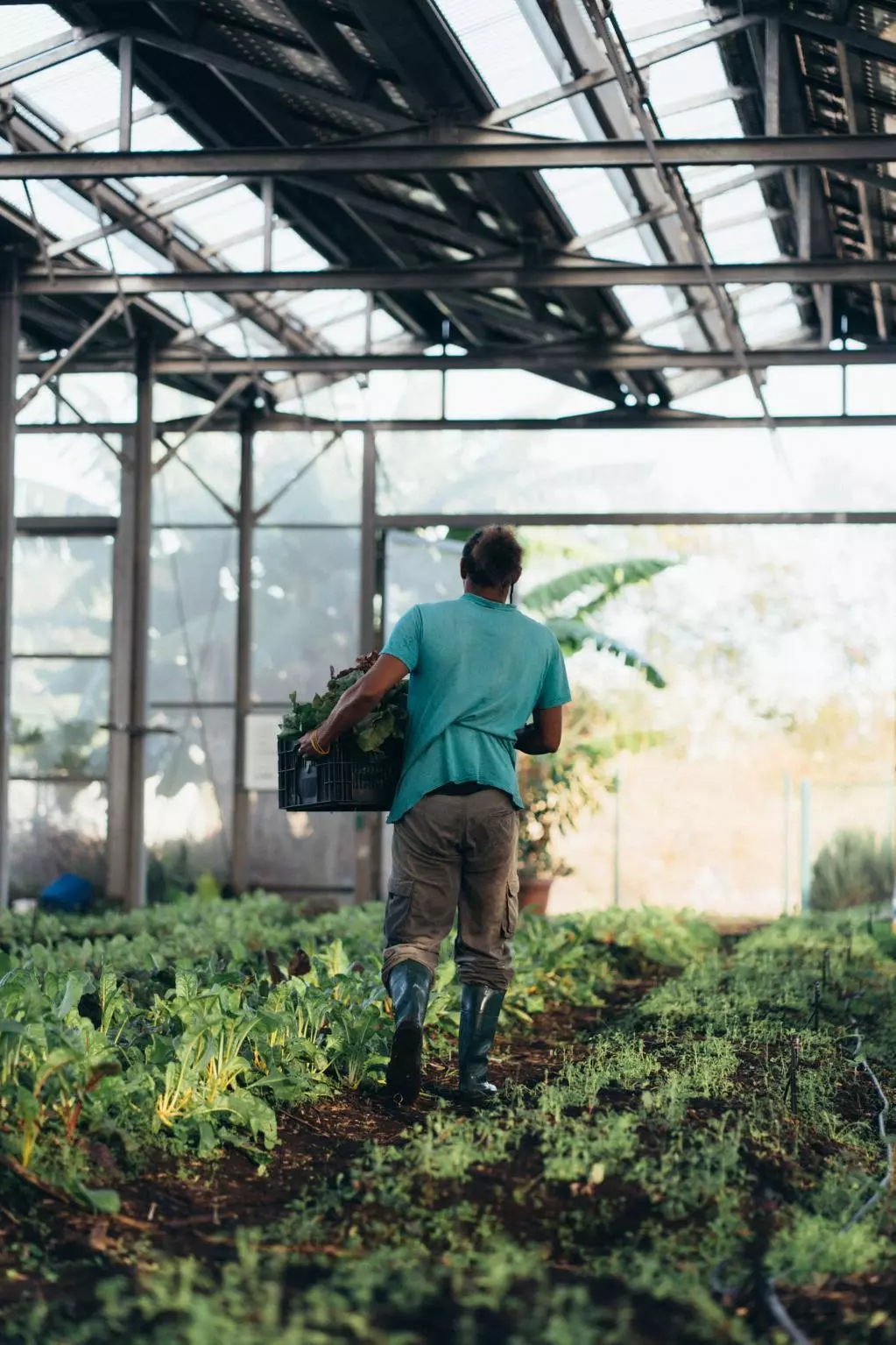
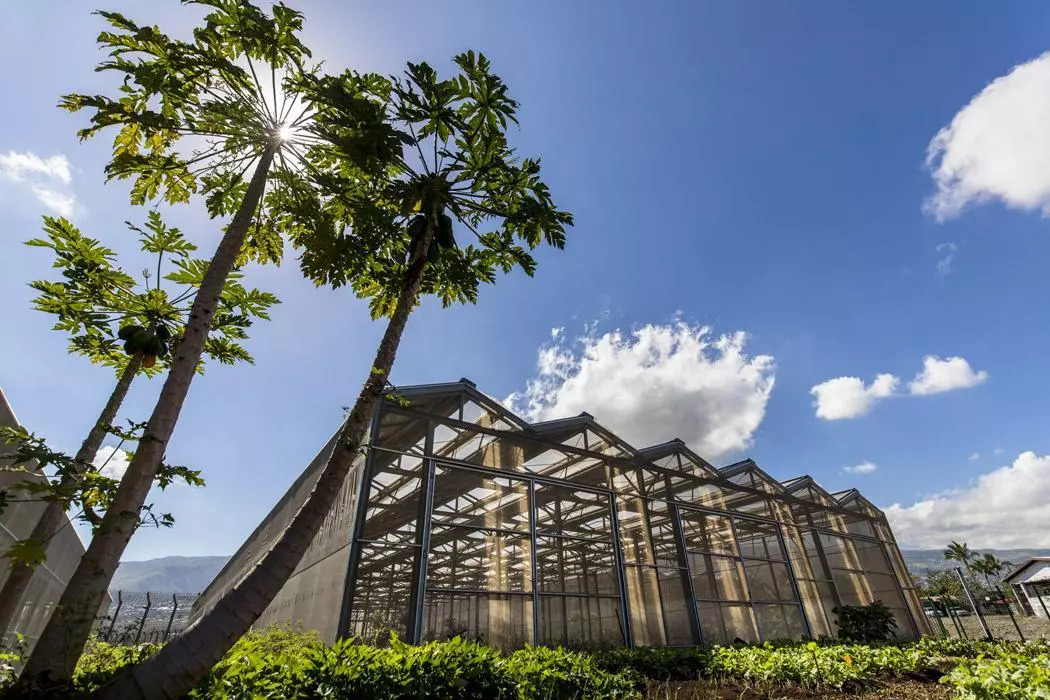
A solar rooftop project developed within a prison in Réunion Island was transformed by Akuo, in close cooperation with the prison authorities, into a powerful tool for training and social and professional reintegration for inmates. The project ultimately resulted in a 9 MW solar power plant combined with battery storage, which at the time was one of the largest battery storage facilities in the world, integrated into an agrivoltaic project featuring market gardening under cyclone-resistant photovoltaic greenhouses.
When responding to a prison tender for a solar rooftop installation, Akuo made a bold and disruptive choice: rather than delivering a conventional solution, the company proposed introducing an oasis of vegetation into an inherently mineral and constrained prison environment. The ambition was not only to develop a more advanced solar and technological project, but above all to create a training and reintegration programme for inmates focused on organic market gardening, beekeeping, and the operation and maintenance of a solar power plant.
This project represented a major technological and social breakthrough, combining what was then the world’s largest battery storage facility with a photovoltaic greenhouse design that initially raised scepticism. However, successive cyclones that devastated unprotected crops across the island in recent years—while leaving the Bardzour site unaffected—ultimately convinced even the most doubtful observers.
Full and close collaboration with the prison administration proved to be a key success factor. Designing a solar power plant that must remain accessible at all times within a highly regulated prison environment, where access is constantly controlled, posed a significant challenge.
The project was built using a methodology that Akuo has refined over more than 20 years, based on stakeholder engagement throughout the design process and in key decision-making. This approach emphasises inclusivity, transparency—even on potentially contentious issues—and responsiveness to feedback from all parties involved. Acceptance of the project by local communities, including prison and administrative stakeholders, emerged through a genuine process of continuous improvement.
For its part, Agriterra designed the agrivoltaic programme, implemented the cropping systems, and supported the training and reintegration programmes for inmates. For over ten years, these initiatives have enabled more than 60 inmates to be trained in organic market gardening, beekeeping, and solar power plant maintenance. Agriterra has also committed to employing some of these trainees in their first jobs—a crucial step towards successful reintegration—and to helping others establish themselves as beekeepers, particularly in mountainous areas classified as UNESCO World Heritage sites. Maintaining a permanent human presence in these hard-to-access zones, often concealed by cloud cover, helps detect wildfires at an early stage—before they become uncontrollable, as tragically illustrated by the Maïdo fire. Beyond producing unique honey from primary tropical forests, these beekeepers may thus also serve as early-warning sentinels, helping to prevent future disasters.
This project, which bridges global ecology with a strong societal dimension, agriculture and renewable energy, lies at the very heart of Micellium’s commitments. It undoubtedly played a role in Micellium’s realisation that action was both necessary and possible. The project has received numerous awards recognising its relevance and impact.
Micellium is proud to be a shareholder in both Akuo and Agriterra, and to help shape their strategies in order to continue developing meaningful and impactful projects. Micellium also thanks the Akuo Foundation, under the aegis of the Luxembourg Foundation, for its philanthropic contribution, which made it possible to implement, among other initiatives, an arboretum and a programme to preserve rare endemic island plant species on the prison site.