

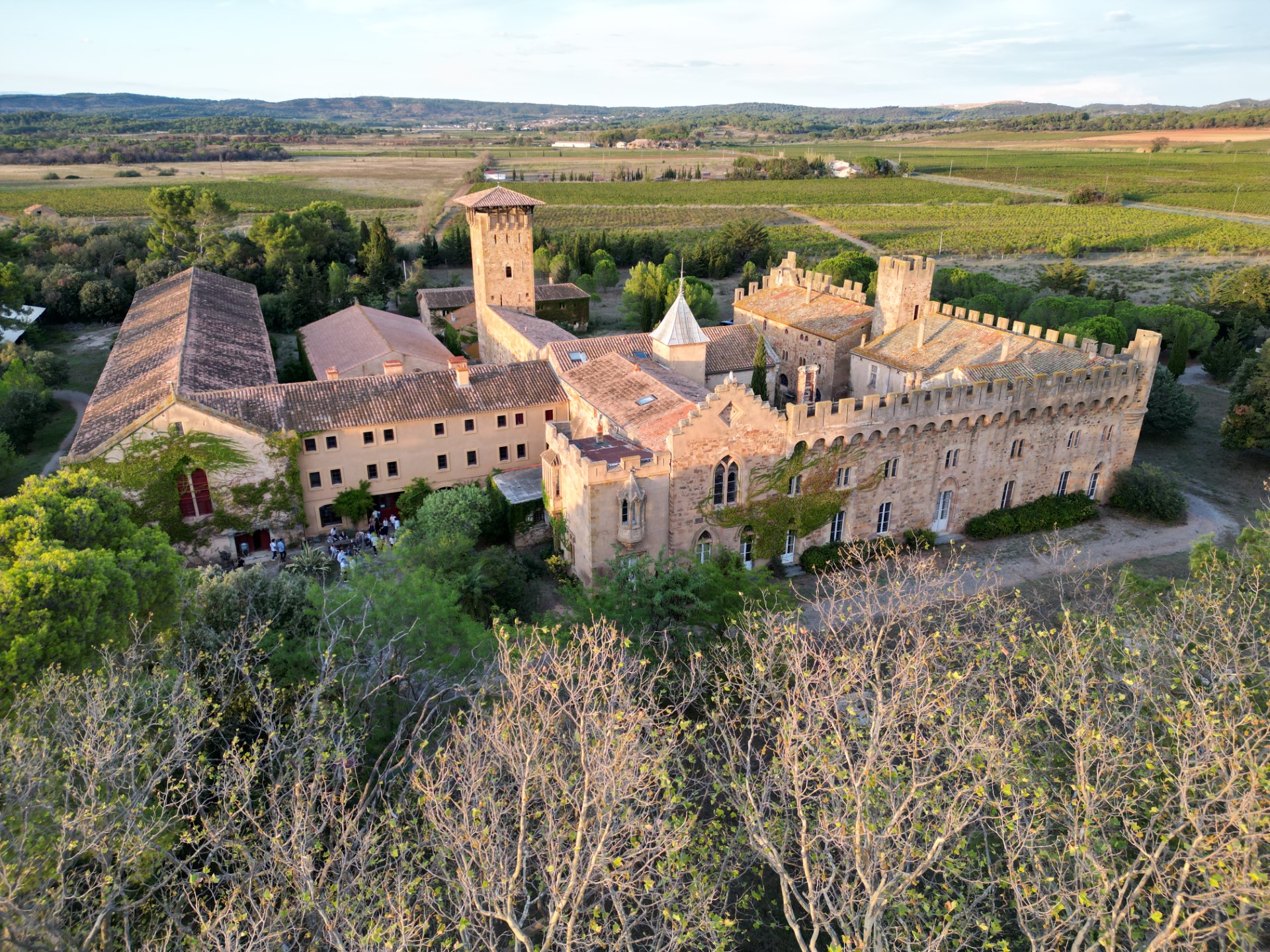
The Abbey of Gaussan is a Cistercian abbey founded in the 12th century. Following the departure of the monks, Agriterra acquired the estate and its 60 hectares with the ambition of transforming it into a centre for outreach, training and exchange dedicated to the promotion of agroecology.
The estate is currently being brought back into cultivation through a comprehensive soil bioregeneration programme. This includes 6 hectares of vineyards, with the first vintage released in 2024, as well as the creation of an agronomic station showcasing various collections of heritage seeds—particularly the multiplication of ancient wheat varieties—in collaboration with Les Maîtres de Mon Moulin in agroecology.
The site will also encourage on-site processing of agricultural production and welcome the public through a market and a food hall offering direct sales.
A significant portion of the abbey’s buildings will be dedicated to hosting seminars and training programmes related to agroecology, with on-site accommodation for participants. A major renovation and archaeological excavation programme has been launched across nearly 7,000 m² and is expected to be completed in time to welcome the first trainees in autumn 2025.
The relaunch of the estate as a diversified agroecological farming operation has already begun, with the establishment of an organic market garden, the restoration of the vineyards, the introduction of acclimatisation programmes for heritage plant varieties, collections of edible roses and table grapes, and the multiplication of ancient wheat varieties.
The estate is also preparing to reintroduce olive groves, develop orchards using agroforestry practices, and create a biodiversity nursery aligned with endemic species and climate evolution.
In addition, the site will serve as a demonstrator for the evolution of agricultural practices and the creation of sustainable revenue streams linked to positive externalities, such as the preservation of ecological interest areas, biodiversity protection, the planting of hedgerows and the restoration of wetlands, the avoidance of carbon emissions and carbon sequestration through soil bioregeneration, improved water management, and the development of renewable energy potential through the installation of a small solar power plant. All of these initiatives are part of the estate’s ongoing certification processes, including Organic (AB), Low Carbon, and Regenerative labels.
This project establishes a strong connection between global ecology—with a pronounced societal and paradigm-shifting dimension—agriculture and renewable energy. It perfectly illustrates Micellium’s commitments.
Micellium is proud to be a shareholder in Agriterra and to contribute to shaping its strategy, continuing to design meaningful and impactful projects.